Experience CS ✷ Raspberry Pi Foundation
A computer science curriculum any teacher can teach
Problem
Five months was tight, but the deadline wasn't the hardest part. Experience CS wasn't a standalone product, it had to be a curriculum website that worked seamlessly with Code Editor for Education, the Foundation's own learning platform. Two products built separately had to feel like one to a teacher who just wanted to teach a lesson.
It also had to fit how US schools actually work. Schools are large, one computer science teacher often handles everything CS-related across the whole school, and administrators add pupils to the school before a teacher ever sees them. A classroom tool that ignored that order of events would fail on the first day of term.
Goal
Build a free, Scratch-based curriculum for students aged 8–14 that any teacher could deliver without a CS background, and connect it to Code Editor for Education so teachers could find a lesson, assign it to a class and follow their students' progress in one continuous experience. It had to be safe for schools, fit the US school system, and ship before the new school year.
Research and considerations
We built on Google's 2023 national study of 945 upper-elementary teachers, run by the University of Texas at Austin, alongside our own personas and journey mapping.
Time was the first barrier
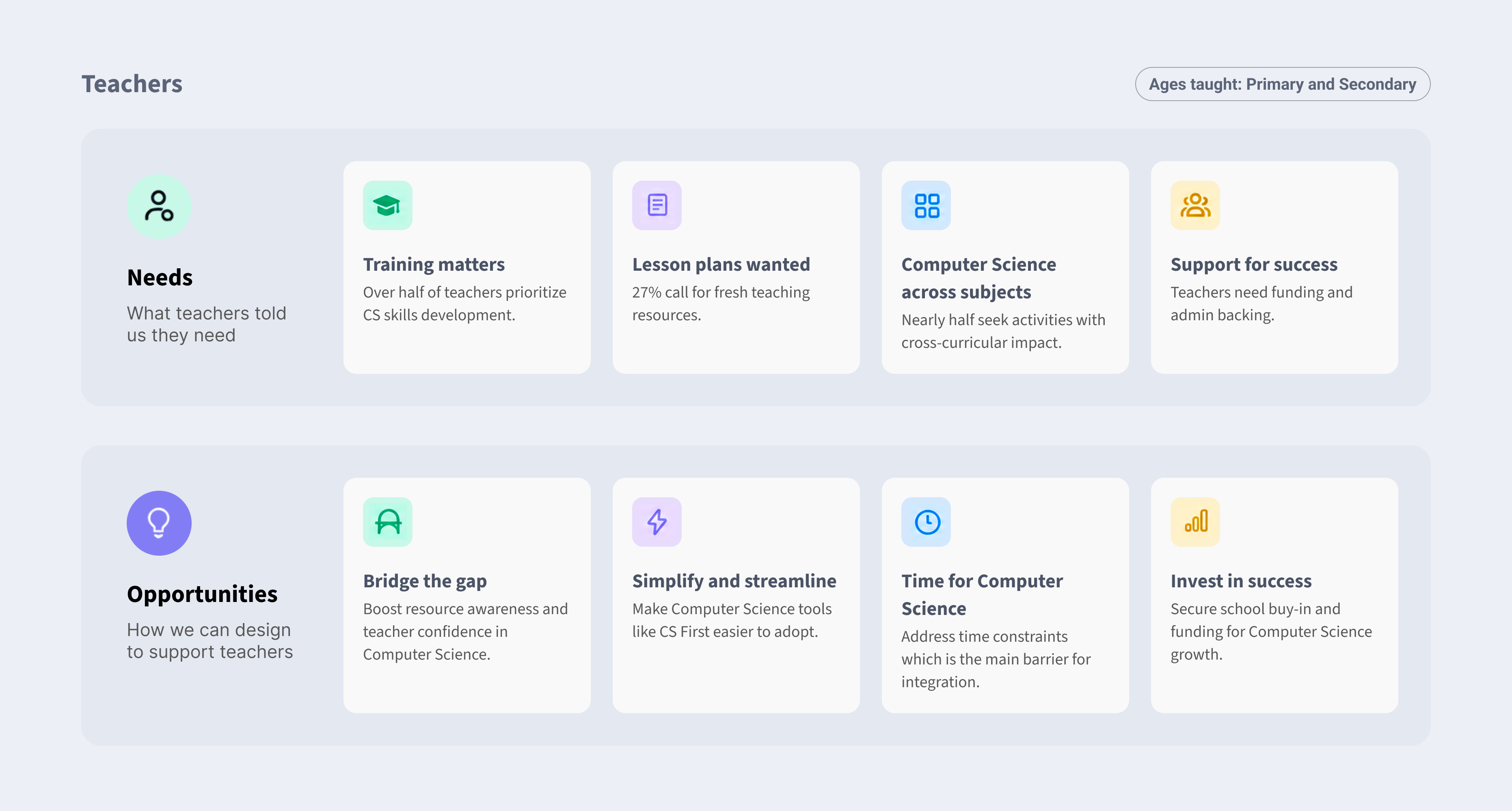
73% of teachers already teaching CS called class time a moderate or major concern. Every flow was measured against one question: how many minutes does this cost a teacher?
Confidence had to come before content
80% of teachers had never had training to teach CS. Lesson plans and classroom resources weren't extras; they were the product.
Logging in was part of the lesson
Teachers who preferred CS First often credited its Google integration: one sign-in, no extra accounts. That made Google sign-in a requirement, not a nice-to-have.
The school system shaped the product
The order in which schools set things up (administrator first, then teacher, then class) determined how account creation, class setup and permissions had to work.
Design
Two products, one experience
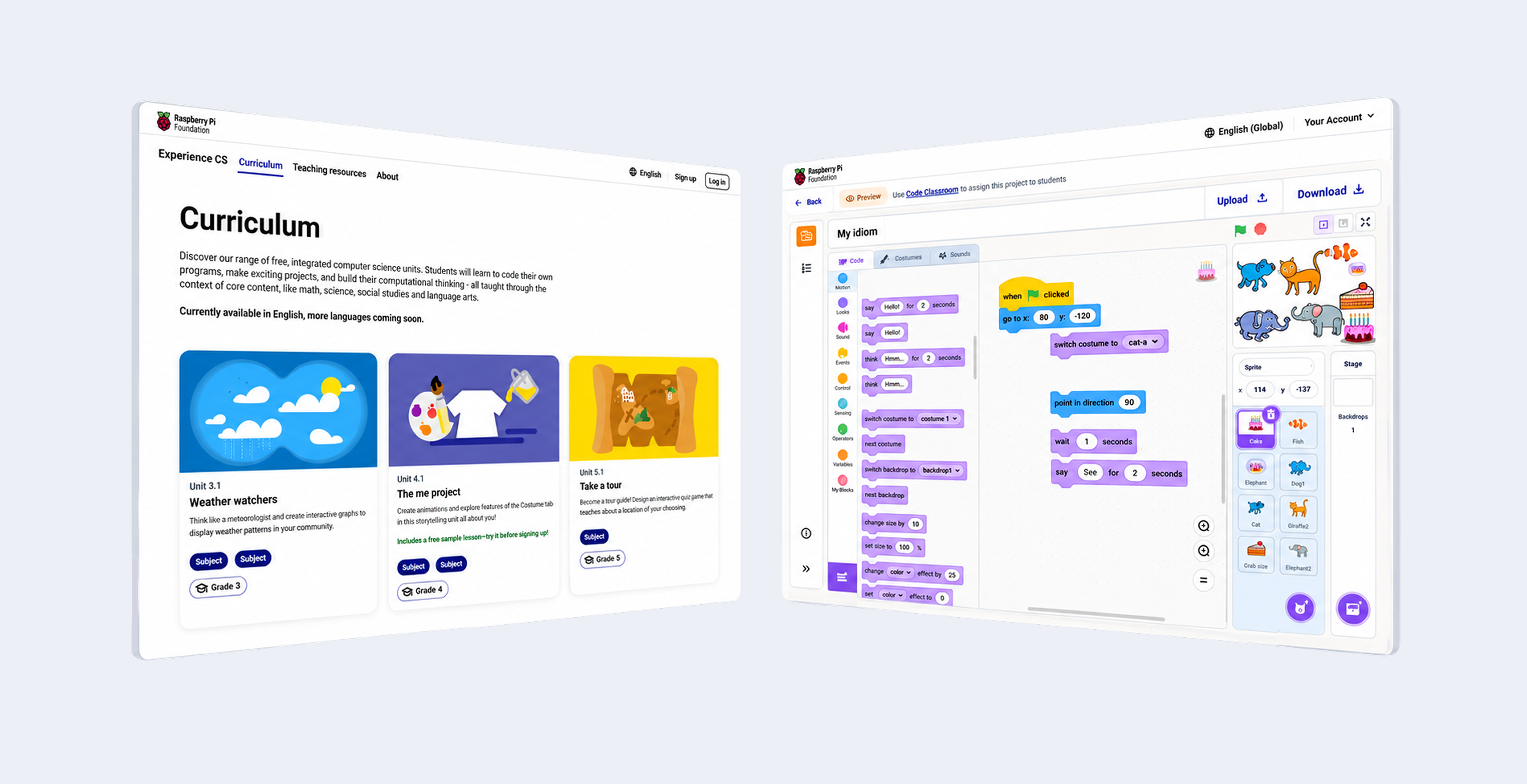
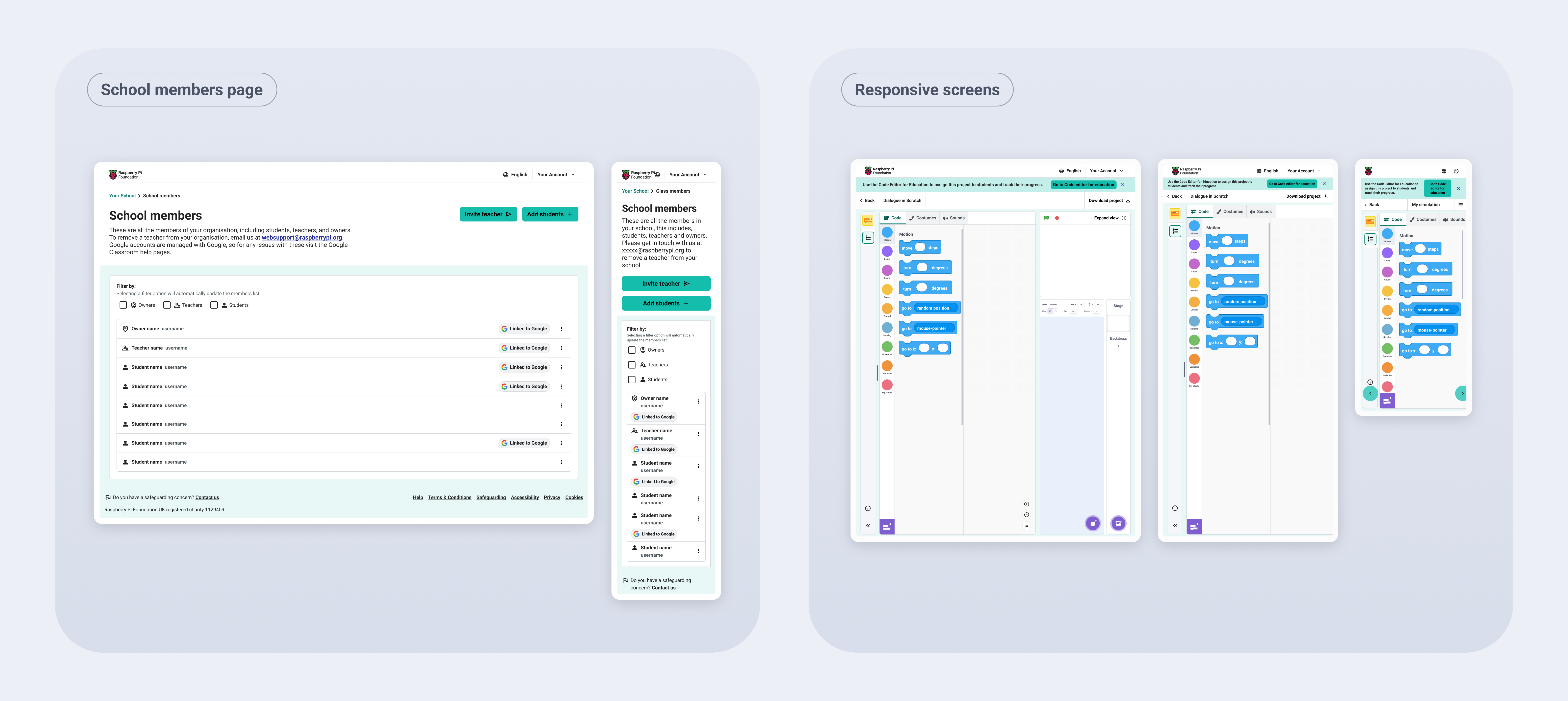
We explored two approaches: a standalone Experience CS site, or a curriculum integrated with Code Editor for Education. We chose to integrate, so teachers browse the curriculum and assign it to classes they manage in the Foundation's existing platform. That was harder to build, but it meant Experience CS was part of a learning platform from day one.
Google sign-in
Most US schools run on Google Workspace, we introduced Google sign-in for Raspberry Pi Foundation accounts and Code Editor for Education, so teachers and students could start with accounts they already had. It removed one of the biggest setup barriers, and it now benefits the Foundation's other products too.
Designed around the school, not the individual teacher
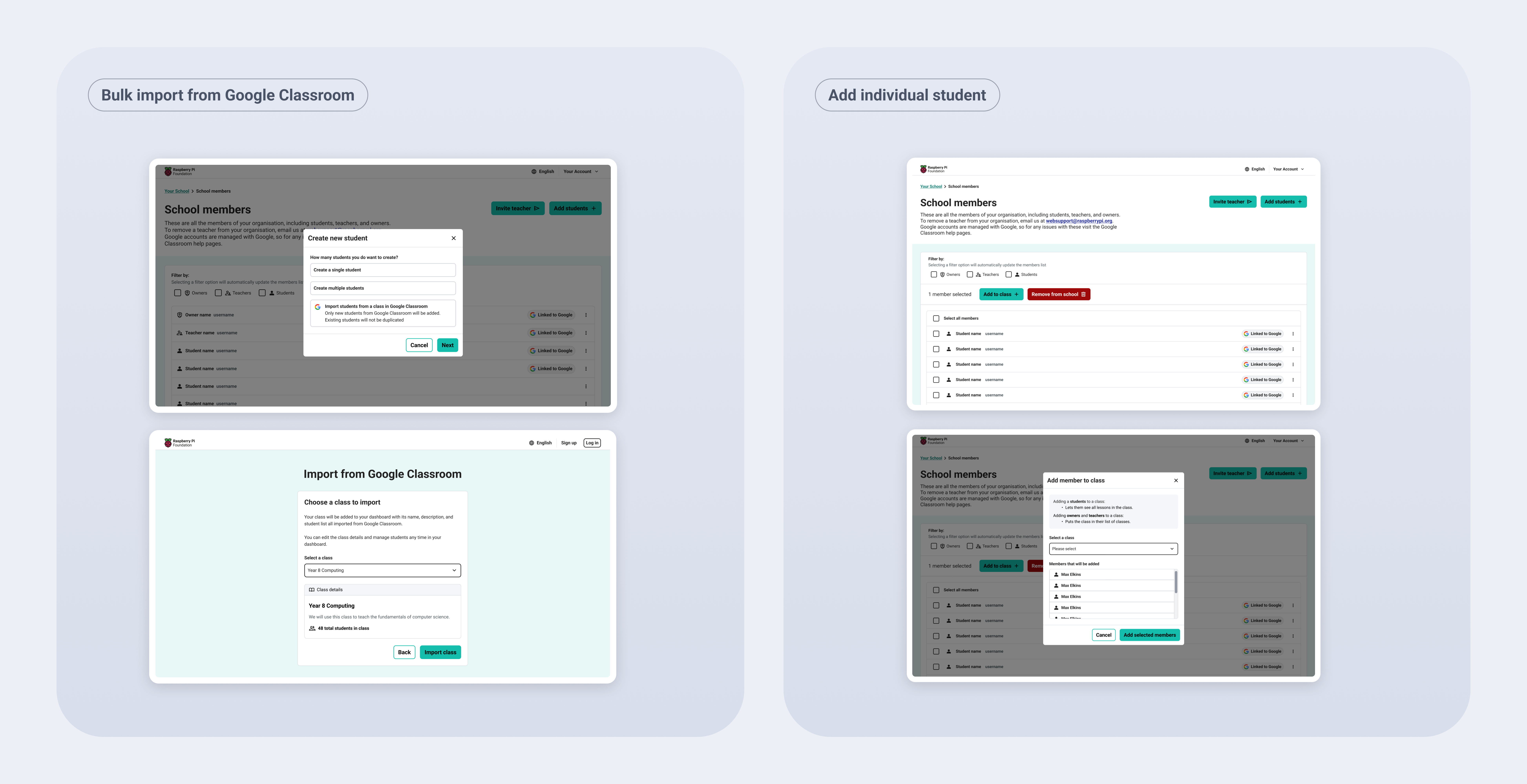
Class management followed the way US schools are actually set up: administrators bring pupils in, and teachers organise them into classes. Designing for that sequence meant one CS teacher could run lessons across a large school without rebuilding everything by hand.
Teachers first, younger learners next
We considered a separate interface for younger learners. With five months, we put teachers first: if teachers couldn't set up and run a class, the student journey would be irrelevant. I designed a flow for the younger learner experience so it's ready to pick up when the time comes.
Ship, then improve
The hardest discussions were about what to cut, waiting for the perfect product would have meant missing the school year and leaving CS First teachers with nowhere to go. As a team we prioritised shipping the core experience on time and improving it with real classroom feedback.
A brand that belonged
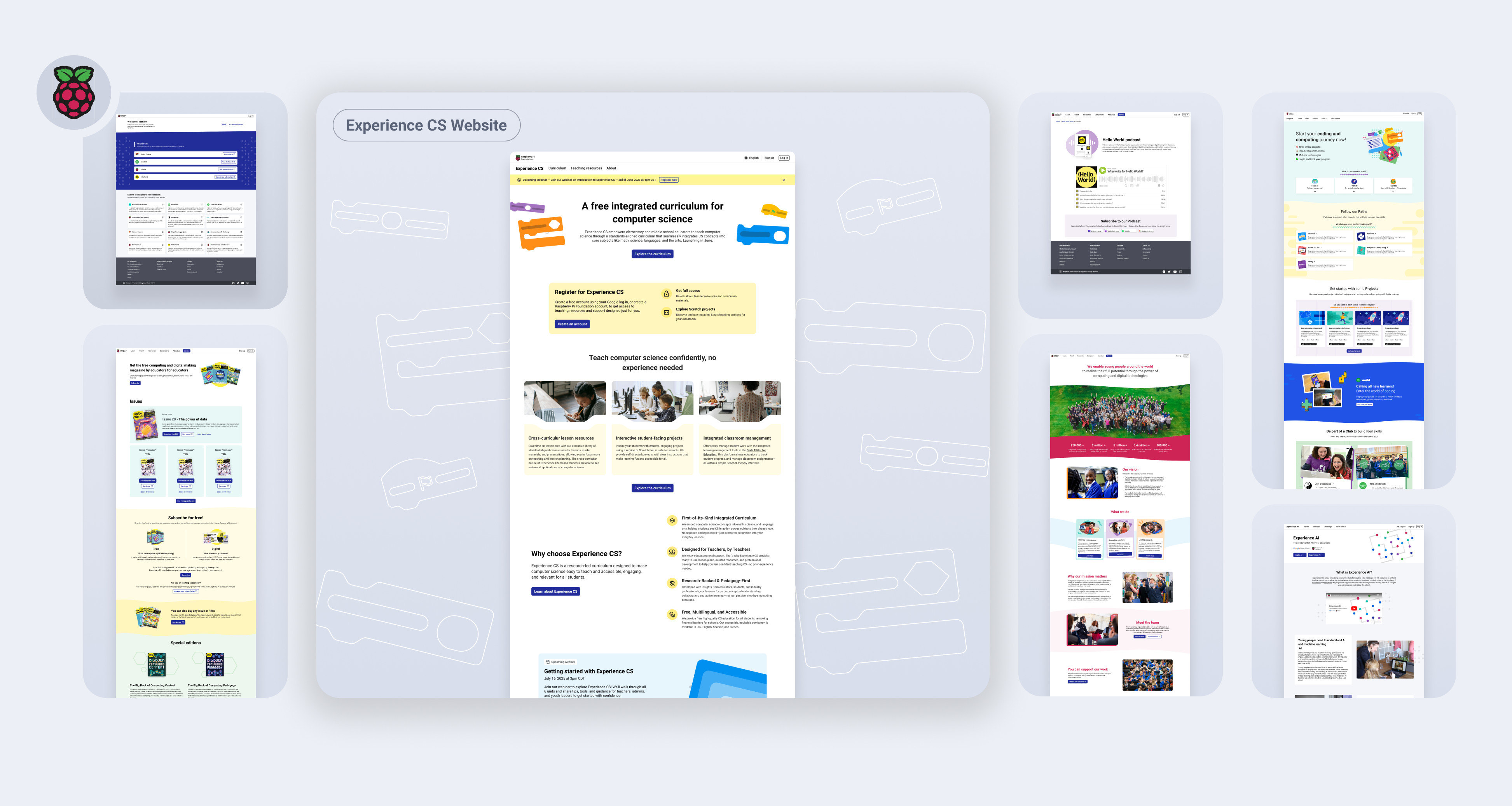
Experience CS had to feel new while clearly belonging to the Raspberry Pi Foundation. I made sure the identity fit within the Foundation's existing brand and based its visual language on Scratch blocks, which the target teachers and students would already recognise.
Safe by default
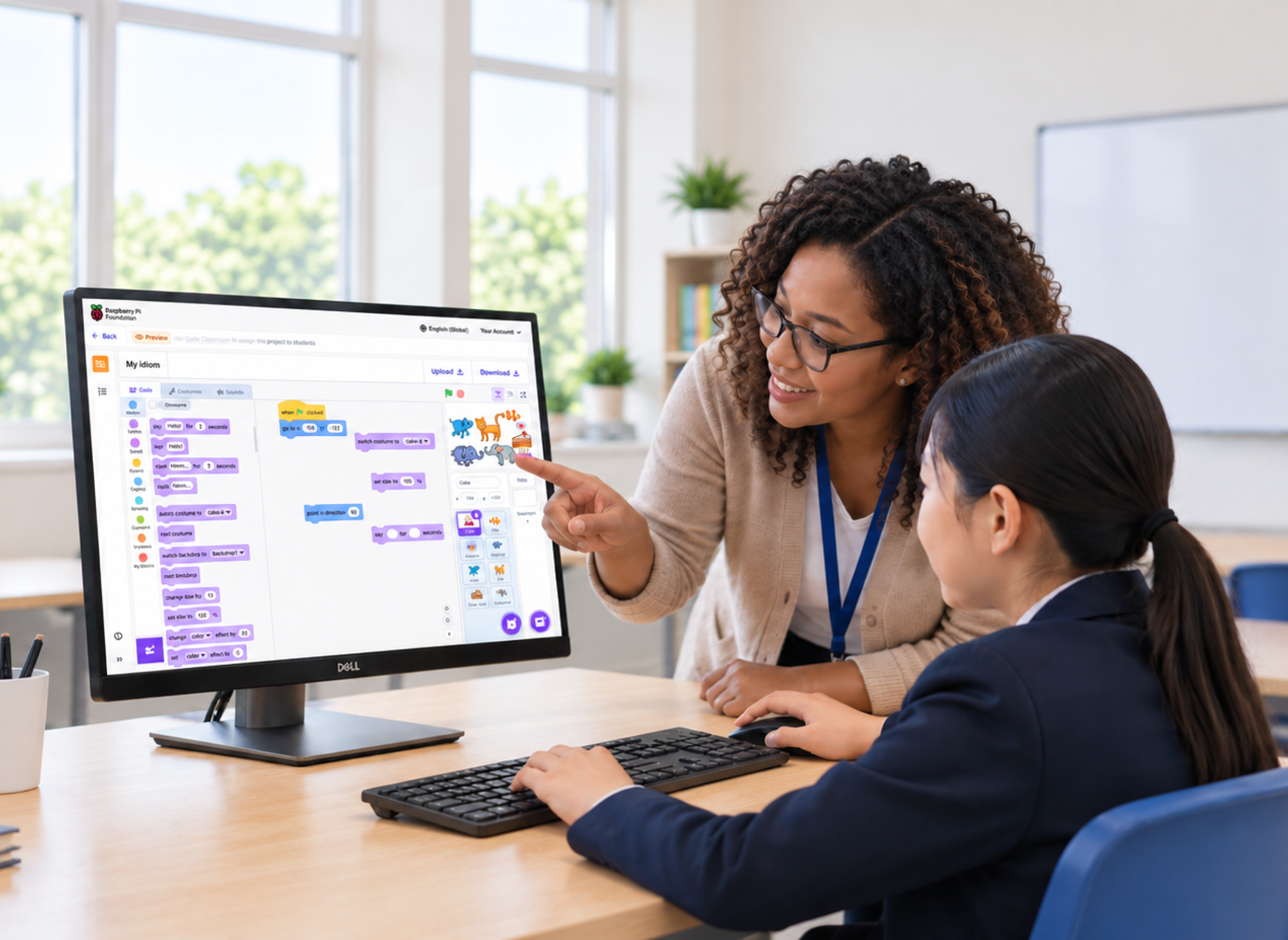
Experience CS uses a version of Scratch without the community and sharing features of the public platform. In a classroom of 8–14-year-olds, safety came before social features.
The product today
Experience CS launched on time for the 2025–26 school year. More than 45,000 students have been assigned to classes, and over 10,000 have completed more than three lessons. The product keeps evolving through feedback from teachers via the customer success team, and the plan for younger learners is ready for the next phase.