Fricanduo
A virtual exhibition for African creatives when COVID got in the way
Context
Fricanduo had a growing community of artists, photographers, and digital designers who had no way to show their work during Covid. We decided to create a VR exhibition, despite neither of us having any experience designing for virtual reality.
Problem
The constraint was stark: free, fast, and representative. Paid platforms were out. Building a custom VR environment was too slow. The work of the artists couldn't be compromised by a platform that wasn't built for them.
Goal
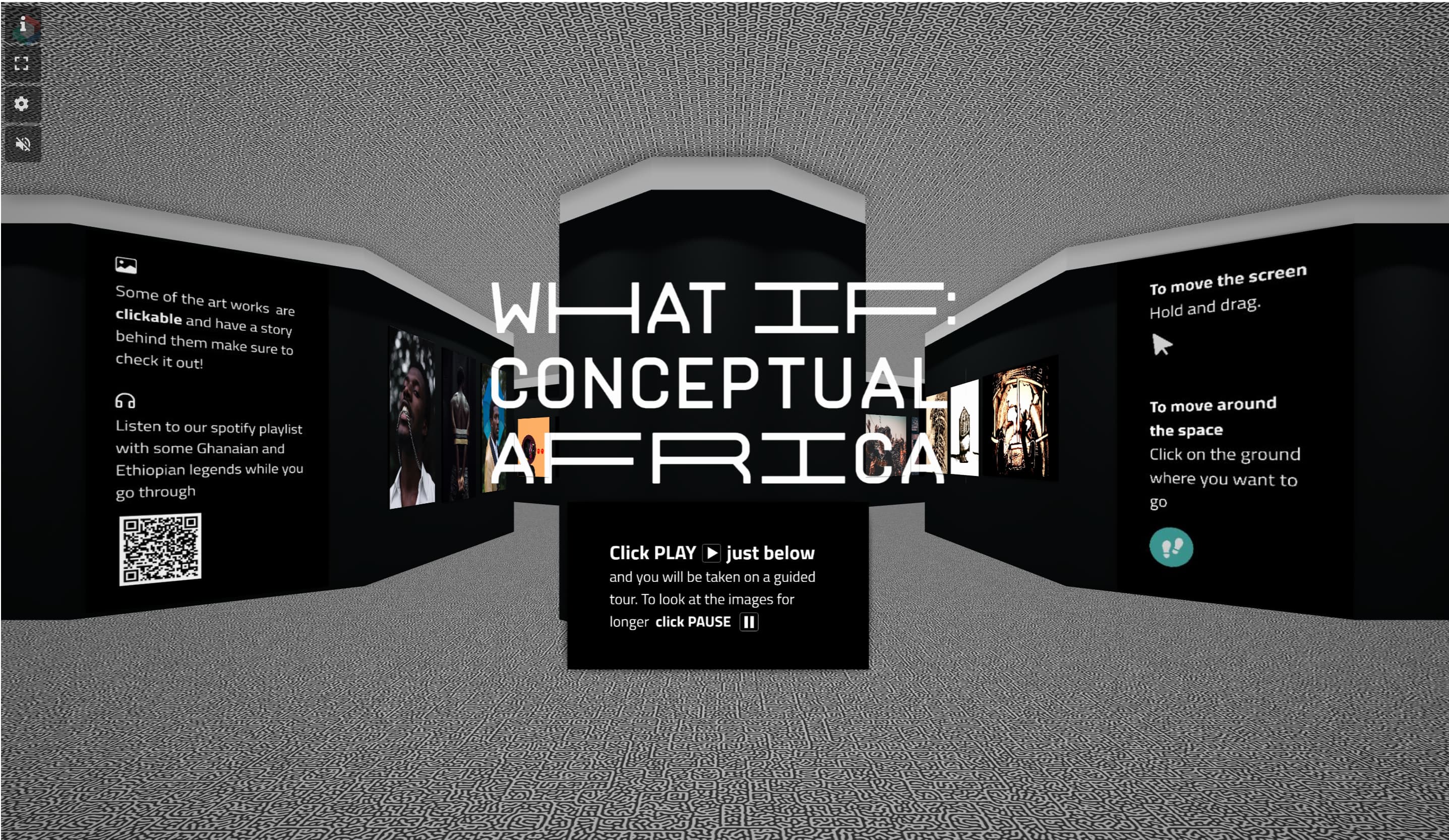
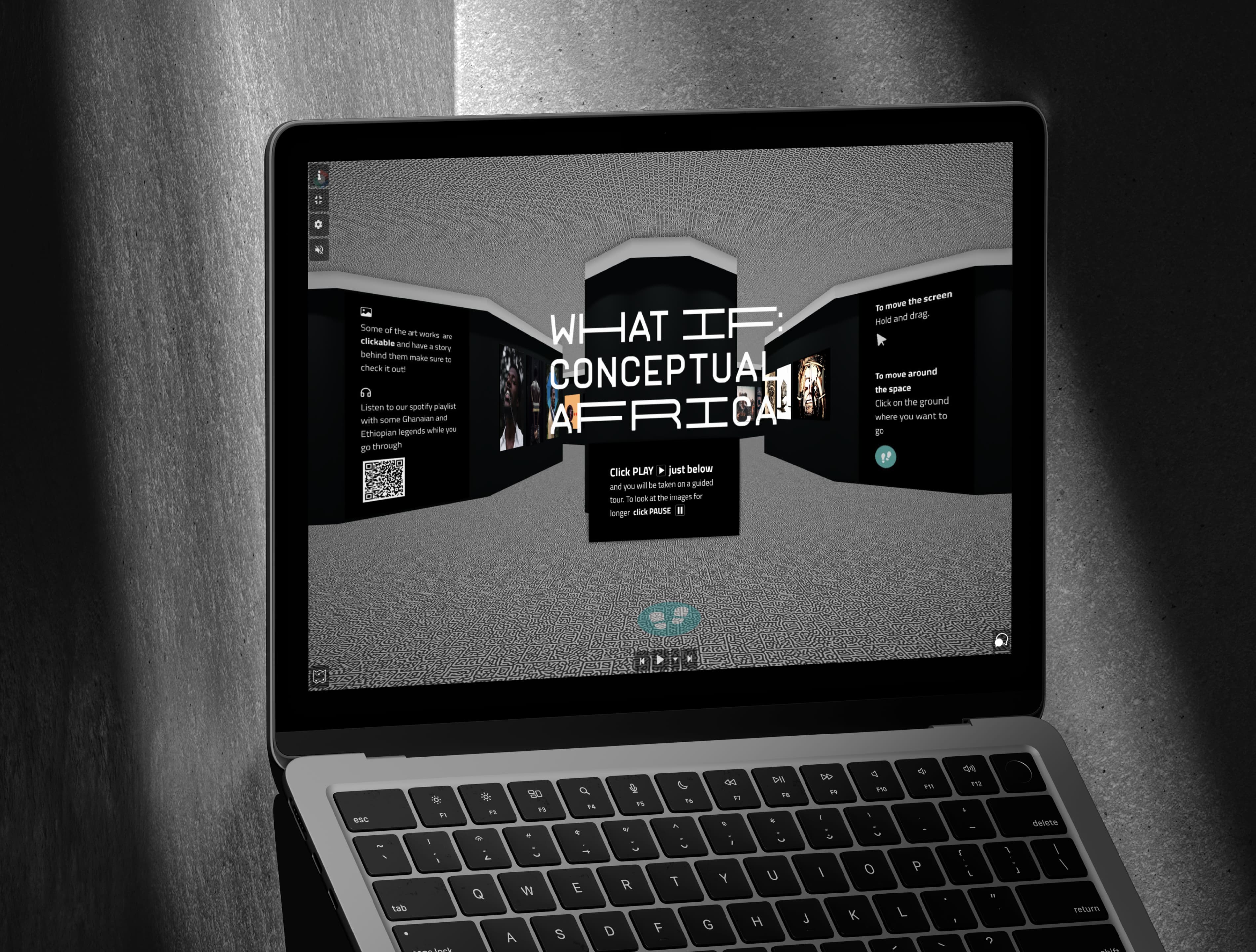
Create an immersive VR exhibition that felt like a real gallery space, curated, cohesive, and distinctly Ghanaian and Ethiopian in its visual identity. This was the second event in Fricanduo's What If series, called What If Conceptual Africa.
Finding the right platform, then working around its limits
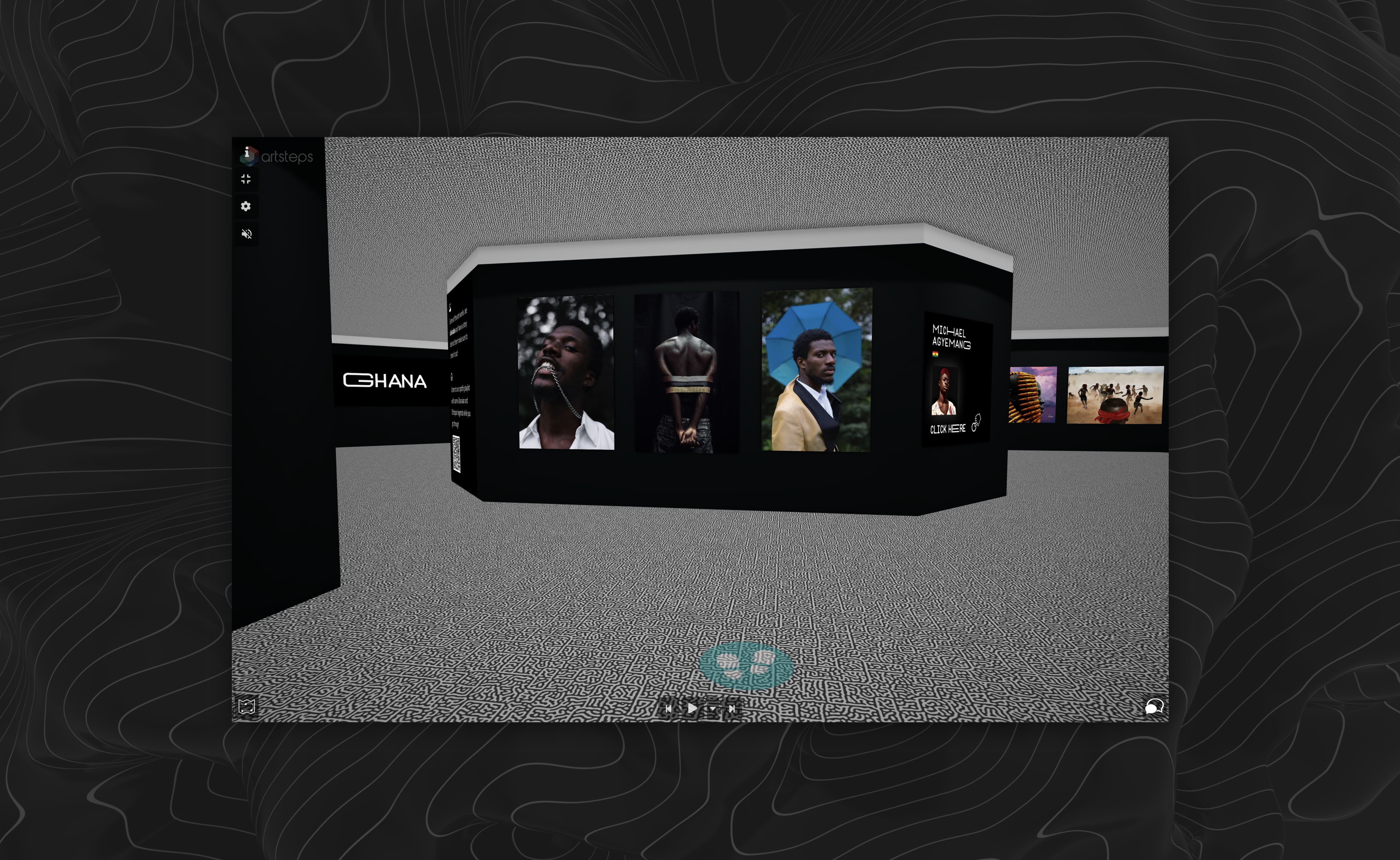
After ruling out paid services and custom builds, we landed on ArtSteps, a free platform for creating VR exhibitions. The catch: predetermined environments, limited object placement, and a tedious upload UI. Designing within those constraints required treating the limitations as the brief. Every creative decision was made with the platform's walls in full view, not ignored.
Building an identity that represented the communities
The visual identity needed to feel specifically Ghanaian and Ethiopian, not generically African. Working with Nicole, an illustrator who volunteered her time, we created graphic elements using Ethiopian and Ghanaian landmarks as 3D backdrops with characters representing the creatives in those cities. Typography led the identity: Punc and Titillum Web gave the exhibition a futuristic register that said this was something new, not a recreation of a physical gallery.
Designing the VR space
The principles for the space were simple but non-negotiable: keep it immersive, don't break the illusion, and ensure it worked across devices. The curation of which work went where was as important as the visual design, the space needed to highlight individual artists without fragmenting the experience.
The website as the gateway
The landing page was a collaborative effort, I led art direction and UI layout, Nicole created the graphic assets, Ryzard built the interactions and transitions that gave the page its storytelling momentum. The job of the site was to get visitors into the VR space, which meant every design decision pointed toward that single action.


What I'd do differently
The exhibition deserved a bigger audience than it got. With more resource I'd have built a proper distribution strategy and reached out to creative communities, diaspora networks, and cultural publications in both countries before launch, not after. The work was good enough to travel further than it did.
The website was functional but not as sharp as it could have been. Given more time I'd have pushed the animations and illustrations further, the concept had enough visual ambition to support something genuinely cutting edge, and I'd have wanted the site to match that.